As part of the wider redevelopment of Project Apple at 1 George’s Square Bristol, Benchmark Scaffolding worked in close collaboration with Mace to deliver an alternative logistics solution for the removal of scaffolding from a highly constrained city-centre site. Due to design changes and the progression of the works, it became impractical for scaffold materials to be struck and removed via the original front-of-building route, requiring a different approach that avoided disruption to surrounding roads, businesses, and public areas.
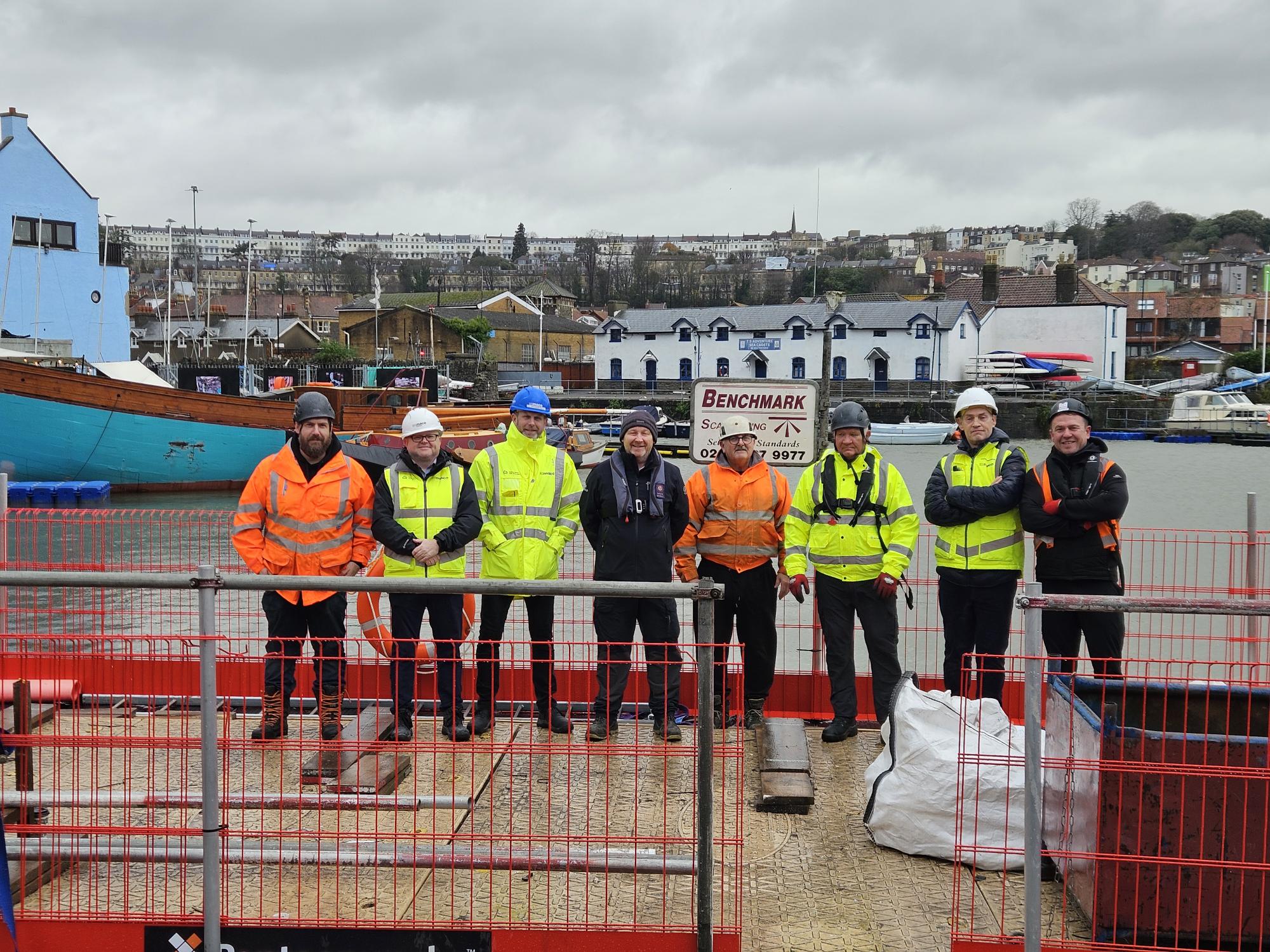
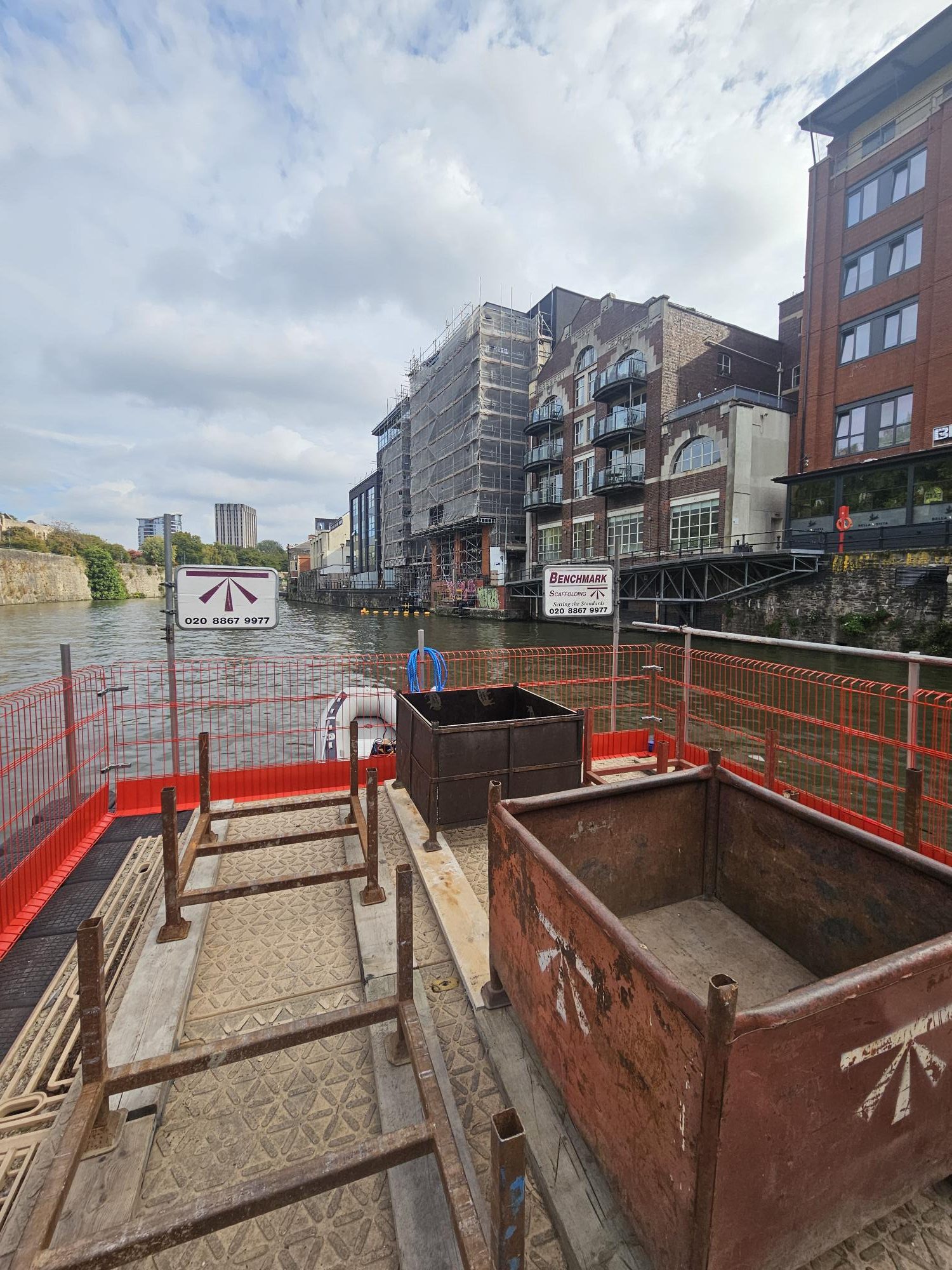
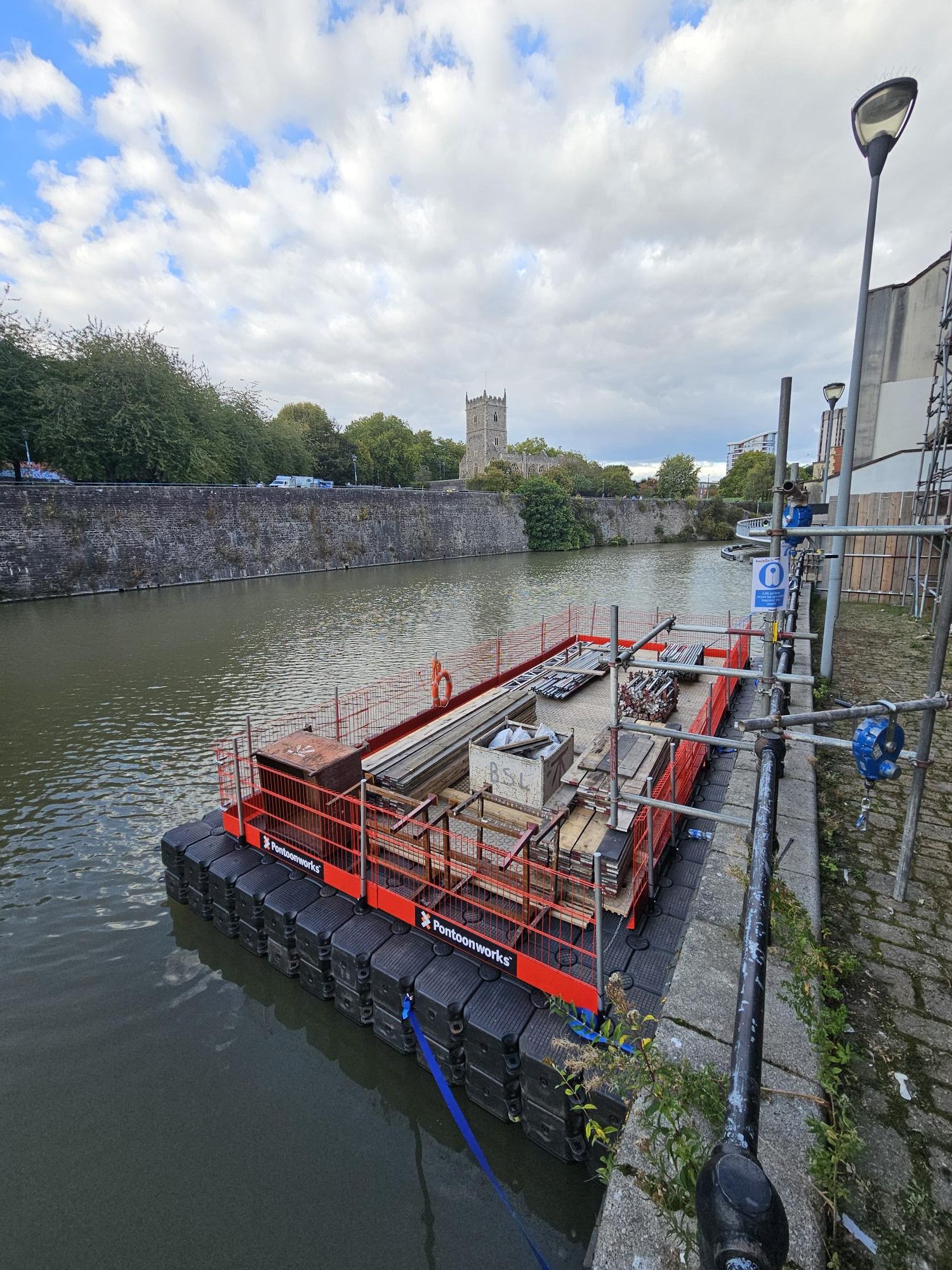
Following detailed planning and coordination with project stakeholders, we proposed using the Bristol Floating Harbour as the primary transport route for scaffold removal. Working with Pontoon Works, the Harbour Master and the team at Underfall Yard, a bespoke pontoon solution was developed. The pontoon was delivered and assembled at Underfall Yard before undertaking its first voyage around the floating dock to the rear of Project Apple, where scaffolding materials were loaded and transported by water rather than by road. All activities on and around the water were carried out under strict safety controls, task specific trained operatives, life-saving equipment, and coordination with the Harbour Master to ensure safe navigation and loading operations at all times.
Once established, the operation was refined into a consistent and efficient process, with up to two full pontoon turnarounds per week. In total, 24 canal journeys were completed, transporting over 360 tonnes of scaffolding materials via the waterway. Following the success of the initial external decant, internal scaffolds were also struck directly onto the pontoon due to ongoing logistical constraints at the front of the building and the need to protect completed works.
The use of the canal significantly reduced heavy vehicle movements through Bristol’s busy city centre, eased pressure on local road networks, and minimised disruption to the surrounding community. It also supported local maritime and logistics operations and demonstrated a modern, practical reuse of a historic waterway originally shaped by Brunel.
This element of the project highlights how early engagement, technical planning and collaborative working can deliver practical, sustainable alternatives to traditional construction logistics on complex city schemes.